
Crack and Joint Repair
Limited, stable cracks may be cleaned and repaired with compatible masonry materials. The flue-to-crown joint may also need a flexible seal that accommodates movement between the clay liner and concrete.
Serving Milwaukee, Wisconsin & surrounding areas
Mon–Fri 8am–6pm Sat 9am–2pm
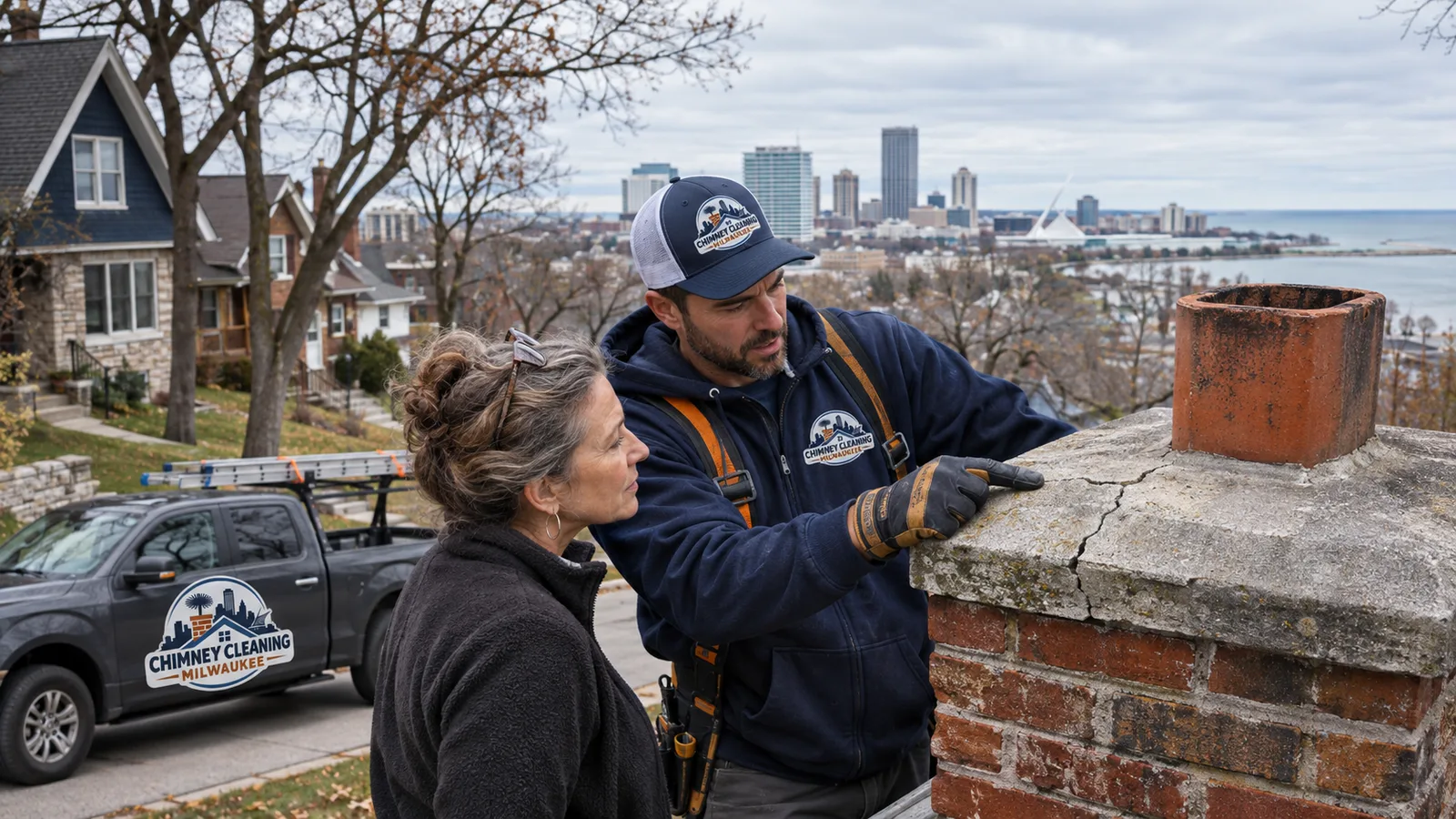
Stop water at the top of the chimney before cracked masonry leads to loose brick, damaged mortar joints, or a larger rebuild.
Chimney crown repair addresses cracks, open joints, poor drainage, and deteriorated concrete at the top of a masonry chimney. The crown should shed rain and melting snow away from the brickwork. Once it splits or separates around a flue tile, water can enter the chimney assembly and accelerate damage during Milwaukee's freeze-thaw cycles.
Our chimney specialists serving Milwaukee, WI assess the crown, flue penetrations, mortar joints, and exposed brick before recommending work. The goal is to identify whether a sound crown can be repaired or whether deterioration calls for removal and replacement. That distinction matters. Coating over loose, deeply fractured concrete may hide damage without correcting it.
Chimney Cleaning Milwaukee provides a written scope based on visible conditions and access. When damage extends beyond the crown, the scope can include chimney brick repair, tuckpointing, or partial rebuilding. Keeping the related masonry work together helps address the water entry point and the damage it has caused.
A crown deserves attention when it has visible cracks, missing pieces, a rough or crumbling surface, or gaps where concrete meets the flue tile. Water staining on the chimney exterior, recurring mortar deterioration near the top, and loose upper courses can also indicate that water is getting into the assembly.
Some defects are difficult to judge from the ground. Hairline surface checking differs from a crack that runs through the crown, and a dark line may be staining rather than an open joint. A close inspection determines the crack depth, whether the crown remains bonded, and whether water can drain away from the chimney.
The metal cap and the masonry crown have different jobs. A cap covers the flue opening, while the crown covers the top of the chimney structure. Replacing a missing cap does not repair cracked concrete around it. Likewise, applying sealant to an isolated joint will not stabilize a crown that is breaking apart.
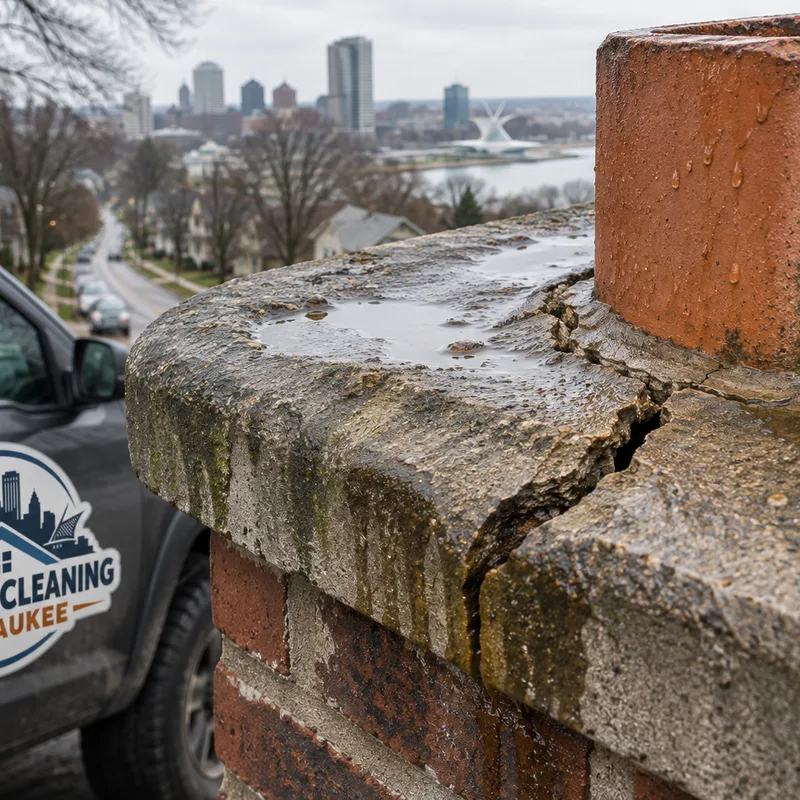
Limited, stable cracks may be cleaned and repaired with compatible masonry materials. The flue-to-crown joint may also need a flexible seal that accommodates movement between the clay liner and concrete.
A bonded resurfacing system may be suitable when deterioration is shallow and the underlying crown is still solid. Loose material must be removed, and the finished surface must direct water toward the outer edge.
A severely cracked, thin, flat, or crumbling crown usually needs to be removed and rebuilt. A proper replacement is formed with positive slope and an overhang or drip detail that carries water clear of the chimney face.
Spalled faces, loose units, and damaged upper courses require more than a coating. Chimney brick repair Milwaukee homeowners request often involves replacing individual bricks and correcting the moisture source at the crown.
Open or washed-out mortar joints are cut back to sound material and repointed with compatible mortar. Professional tuckpointing in Milwaukee, WI should account for the brick's hardness rather than defaulting to an overly hard mix.
When the upper masonry has shifted or deteriorated beyond isolated repair, damaged courses may need to be dismantled and rebuilt. Full chimney rebuilding is reserved for more extensive instability or material loss.
We examine the crown surface, edge, slope, flue joints, brick faces, mortar joints, and visible flashing area. Safe roof access and chimney height affect how closely each condition can be assessed.
The inspection determines whether damage is limited to repairable cracks or extends through the crown and upper masonry. Loose concrete, displaced brick, and repeated patching can change the recommended scope.
Failed coatings, debris, loose concrete, and unsound mortar are removed. Proper preparation exposes solid material so repairs can bond rather than resting on a weak surface.
The work may include filling cracks, renewing the flue joint, resurfacing, forming a replacement crown, repointing joints, or replacing damaged brick. New crown work is shaped to drain water away from the chimney.
We check repaired joints, crown slope, exposed edges, and transitions around each flue. The final review also identifies any conditions outside the agreed scope that may need future attention.

A chimney crown has little shelter from Lake Michigan weather. Rain and melting snow can enter small openings. When trapped moisture freezes, it expands and can widen cracks, loosen mortar, and break the fired face from brick. Repeated freeze-thaw exposure is why a minor crown defect can become a chimney masonry problem.
Housing varies across the city, so repair methods should follow the materials rather than a standard recipe. Bay View has many older brick and frame homes where chimneys may have seen several generations of patching. Washington Heights is known for early twentieth-century houses with prominent masonry details, while the East Side includes older homes and closely spaced properties that can complicate roof access. In Wauwatosa, established neighborhoods contain many masonry chimneys exposed above pitched roofs. Each condition affects access, protection of surrounding surfaces, and the appropriate mortar or crown detail.
Scheduling masonry work during suitable temperatures gives cement-based materials time to cure. Temporary coverings may also be needed to protect fresh work from rain, direct sun, wind, or sudden temperature changes. A masonry contractor in Milwaukee should account for forecast conditions rather than treating curing as an afterthought.
Chimney rebuilding becomes appropriate when masonry is loose, leaning, deeply spalled, or too deteriorated for isolated brick replacement and repointing. The extent may be limited to several courses near the crown, or it may continue farther down the stack. A sound crown cannot compensate for unstable masonry beneath it.
For chimney rebuilding in Milwaukee, the work should preserve sound material where practical and replace what no longer provides a dependable base. Existing brick dimensions, appearance, and physical properties guide replacement selection. Mortar must also be compatible with the masonry. A mix that is much harder and less permeable than older brick can concentrate stress in the units instead of the joints.
Flashing defects can produce symptoms similar to crown failure, especially staining or dampness lower on the chimney. The inspection should distinguish the crown, masonry joints, cap, and roof transition before work begins. That approach keeps Milwaukee masonry repair focused on the actual entry point rather than the most visible stain.
Chimney crown repair in Milwaukee typically costs about $600 to $2,000 for crack treatment or resurfacing, while removal and replacement commonly ranges from $1,500 to $4,000 or more. Brick replacement, tuckpointing, or rebuilding adds to the scope.
Final price depends on crown dimensions, number of flues, roof pitch, chimney height, access, concrete condition, and damage to the upper masonry. Scaffolding or lift access can increase labor and setup costs. These are general, non-binding ranges; the exact cost is confirmed after an on-site inspection.
Address an open crown crack before another freeze-thaw season gives water more time to damage the brick and mortar beneath it.
Call for a Free QuoteYes, a crown can often be repaired when cracks are limited and the underlying concrete remains solid and properly sloped. Deep fractures, loose sections, inadequate thickness, or widespread deterioration usually make replacement more dependable. Milwaukee freeze-thaw exposure makes it especially important to remove unsound material rather than cover it.
Many limited repairs can be completed within one working day, while crown replacement or associated brickwork may require additional time. Roof access, chimney size, preparation, curing needs, and weather affect the schedule. Cement-based materials also need protection while they develop strength.
No, a chimney cap covers the flue opening, while the crown is the concrete or masonry surface covering the top of the chimney. A damaged crown can admit water around the flue and into the brickwork even when a metal cap is present.
Masonry repair requires temperatures and protection suitable for the specified material, so winter conditions can restrict scheduling. Frozen substrates, precipitation, and low curing temperatures can interfere with cement-based repairs. The contractor should follow the repair material's temperature limits and use weather protection when appropriate.
Rebuilding is usually recommended when bricks or courses are loose, displaced, leaning, or too extensively deteriorated for individual replacement. Localized spalling may need only selected brick repair and repointing. An inspection should determine whether the remaining masonry provides a stable base for the new crown.
Tuckpointing repairs deteriorated mortar joints, but it will not close cracks through the crown or correct failed joints around a flue. If both areas are defective, both need attention. Treating only the mortar can leave the primary water-entry point open.
A written estimate should identify preparation, repair material, crown treatment, flue-joint work, brick or mortar repairs, access needs, cleanup, and exclusions. It should also state whether the proposal is for patching, resurfacing, full crown replacement, or partial rebuilding. Those scopes differ substantially in labor and expected service.
Arrange an inspection with Chimney Cleaning Milwaukee for a clear assessment of the crown, upper brickwork, and mortar joints, followed by a repair scope matched to the chimney's condition.