
Firebox and Smoke Chamber
The inspection looks for cracked firebrick, deteriorated mortar joints, gaps, and visible changes around the smoke chamber and damper area.
Serving Milwaukee, Wisconsin & surrounding areas
Mon–Fri 8am–6pm Sat 9am–2pm
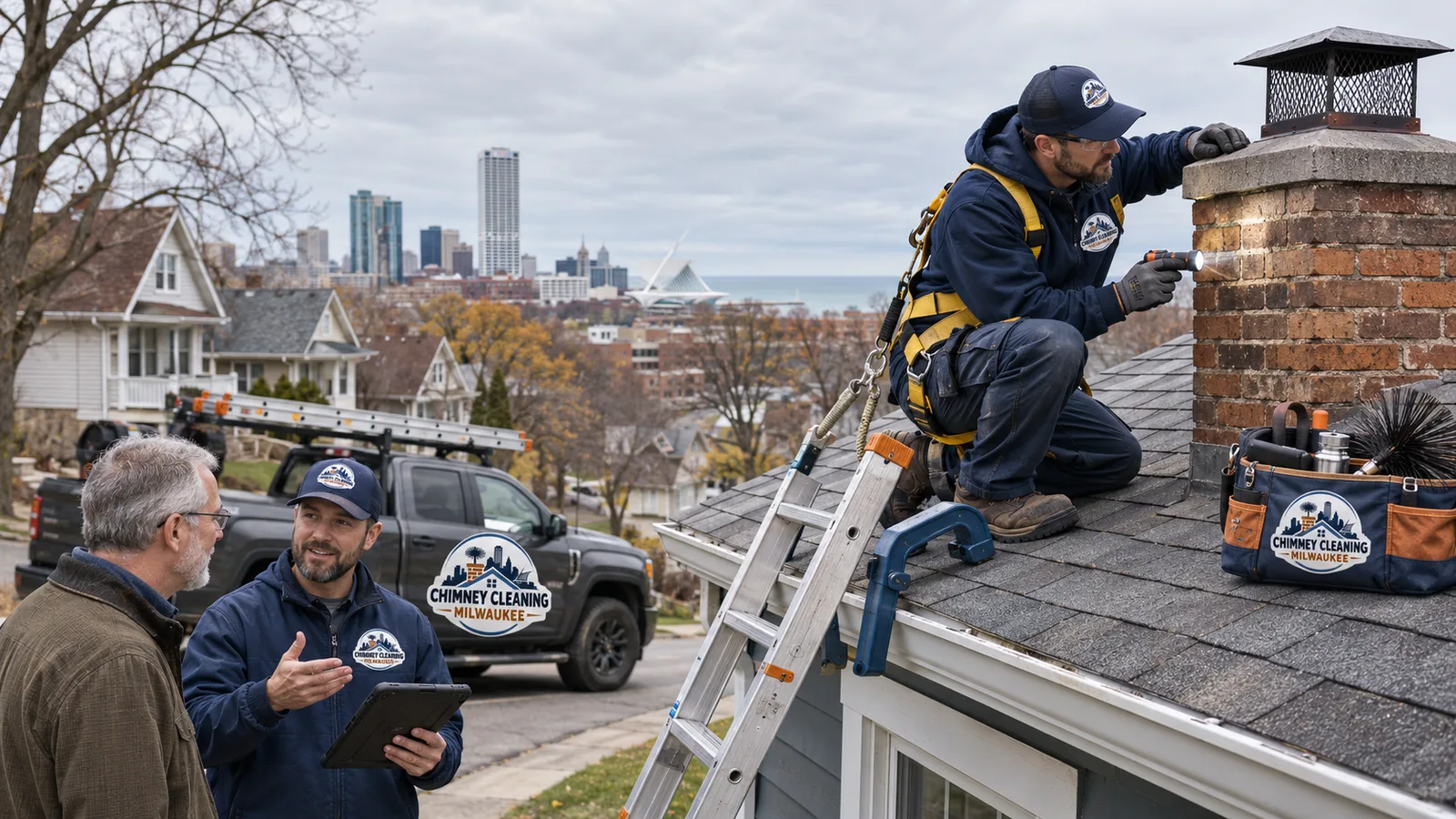
Get a careful assessment of the flue, firebox, masonry, and accessible exterior, with clear findings that help you decide what needs attention.
A chimney inspection in Milwaukee can identify creosote deposits, damaged flue components, open mortar joints, moisture entry, and venting concerns before they become harder to address. Chimney Cleaning Milwaukee provides evaluations for homeowners who are preparing for fireplace use, responding to a suspected problem, or gathering information before buying or selling a property.
Our work starts with questions about the chimney, appliance, fuel type, and recent performance. We then examine the accessible portions of the system and document relevant findings. Throughout the inspection, an experienced chimney team in Milwaukee, WI explains what was observed, why it matters, and whether further evaluation or corrective work should be considered. The goal is a practical account of current conditions, rather than assumptions based on the chimney's age or appearance alone.
Milwaukee's freeze-and-thaw cycles make exterior condition especially relevant. Water entering small masonry openings can freeze, expand, and contribute to cracked mortar or spalled brick faces. Older homes may also have chimney systems that were altered as heating equipment changed, so the visible fireplace does not always tell the full story.
The inspection looks for cracked firebrick, deteriorated mortar joints, gaps, and visible changes around the smoke chamber and damper area.
Accessible flue surfaces are checked for deposits, cracks, missing joints, displacement, and other conditions that may affect safe venting.
The exterior review considers brick, mortar, crown condition, flashing areas, and signs that water may be entering the chimney structure.
The top of the chimney is assessed when safely accessible, including the cap, spark screen, flue termination, and surrounding clearances.
Visible connector pipes, thimbles, and appliance connections are reviewed when they are part of the chimney system being inspected.
Staining, odors, debris, smoke movement, and water marks can point to conditions that deserve closer investigation.
Chimney inspections are commonly described using three levels under the National Fire Protection Association's NFPA 211 framework. The right level depends on whether the system is receiving a routine check, has undergone a change, or shows evidence of a concealed problem.
A Level 1 inspection covers readily accessible portions of a chimney and is generally appropriate when continued use is planned under the same conditions and no problem is suspected. A Level 2 inspection adds accessible areas such as attics, crawl spaces, and basements where applicable, along with video scanning of the flue interior. It is commonly considered after a property transfer, a change in fuel or appliance, a chimney fire, or a significant event that may have affected the system.
A Level 3 inspection is reserved for cases where a serious concealed hazard is suspected and access requires removing limited building components. That work should be discussed and authorized before any destructive access begins. We match the inspection scope to the reason for the visit and explain the limits of what can be seen.
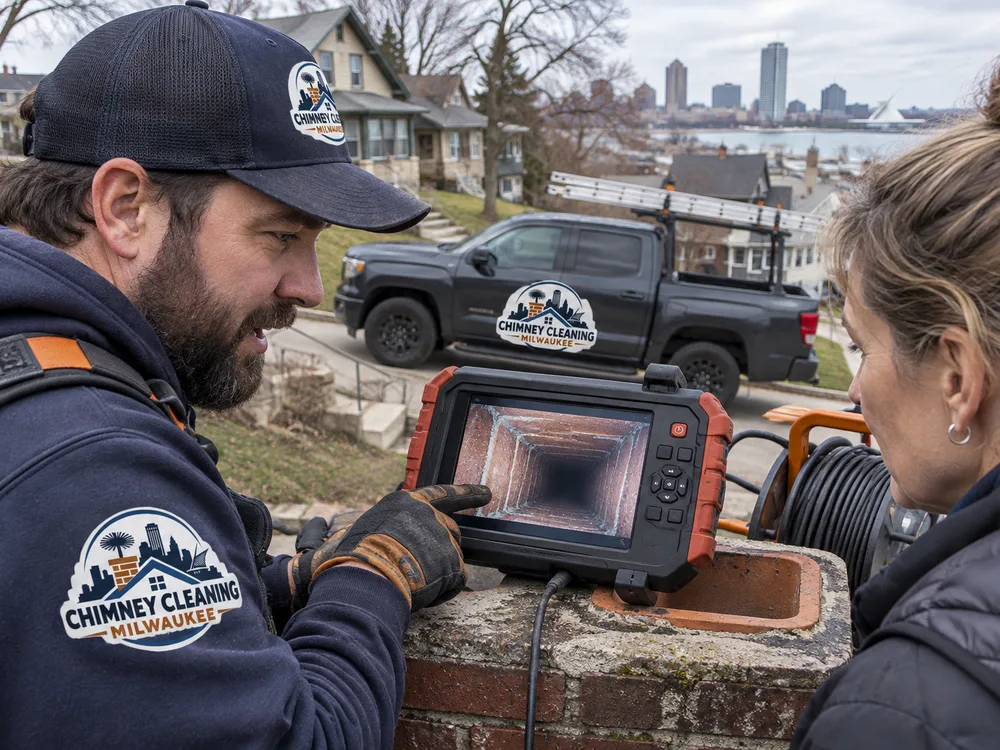
We ask about fireplace or appliance use, fuel type, smoke or odor issues, water entry, previous repairs, property changes, and any known chimney fire.
The work area is protected as needed. The inspector checks accessible interior components, exterior masonry, connection points, and the chimney termination when conditions allow safe access.
For a Level 2 evaluation, a camera is moved through the flue to examine liner surfaces, joints, offsets, and areas that cannot be assessed with a basic visual review.
You receive an explanation of observed conditions, inspection limitations, and reasonable next steps. Urgent concerns are separated from routine maintenance items.
Milwaukee has a wide mix of chimney construction and building ages. In Bay View, many older houses have masonry chimneys that may have been adapted as heating systems changed. Washington Heights and Sherman Park also contain substantial older housing stock, where prior repairs, unused flues, and aging mortar deserve close attention. On the East Side, roof access and multiple chimney flues can affect how an inspection is planned. In Wauwatosa, established neighborhoods include both older masonry systems and later homes with different fireplace assemblies.
Cold winters increase fireplace and heating-appliance use, while repeated freezing and thawing can expose weaknesses in exterior masonry. Snow, ice, high wind, or a wet roof may prevent safe access to the chimney top on the scheduled day. Interior and ground-level work may still be possible, but an inspector should state any access limitation instead of presenting an incomplete view as a full evaluation.
A Milwaukee chimney inspection should also account for the difference between wood-burning fireplaces, gas appliances, and heating equipment vented through masonry chimneys. Each has different operating conditions. The inspection should identify what is connected to each flue and avoid treating the chimney as a single undivided passage.
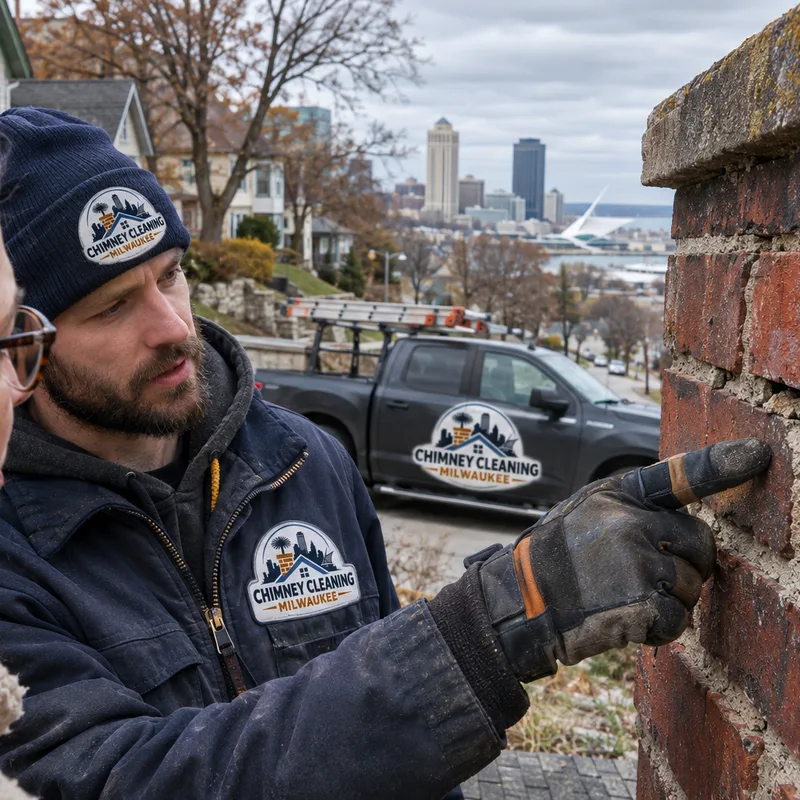
The NFPA recommends that chimneys, fireplaces, and vents be inspected at least annually for soundness, freedom from deposits, and correct clearances. An annual check is especially useful before regular seasonal use because conditions can change even when a fireplace has been used only occasionally.
Arrange an inspection when smoke enters the room, debris falls into the firebox, odors persist, or water stains appear around the chimney. A new cap or surface repair may not address damage within the flue, so visible symptoms deserve a broader assessment.
Inspection is also appropriate after a chimney fire, severe weather damage, an appliance or fuel change, or a long period without use. Buyers and sellers often request a Level 2 inspection because a general home inspection may note visible concerns without scanning the full flue interior. If cleaning or repairs are recommended, those services should be quoted separately so you can distinguish evaluation findings from proposed work.
A Milwaukee chimney inspection typically costs about $100 to $250 for a basic Level 1 visit, while a Level 2 inspection with video scanning often ranges from $250 to $600. A Level 3 evaluation can cost more because it may require special access and limited removal of building materials.
Final pricing depends on the number of flues, chimney height, roof access, system type, inspection level, and whether concealed areas require additional work. Cleaning, testing, or repairs are usually separate. The exact cost and scope are confirmed before the inspection visit.
If you have noticed smoke, odors, falling debris, masonry damage, or water around the chimney, schedule an evaluation before the next fire or heating cycle.
Call for a Free QuoteA straightforward inspection often takes about 45 to 90 minutes, while a multi-flue system or Level 2 video inspection may take longer. Roof access, appliance connections, deposits, and the number of accessible areas all affect timing. Snow, ice, or rain can also delay exterior work for safety.
A Level 1 inspection is generally suited to routine annual evaluation when the system and its use have not changed, while Level 2 is commonly appropriate after a property transfer, chimney fire, appliance change, fuel change, or suspected damage. The reason for the inspection and the chimney's history determine the proper scope.
Cleaning may be needed when deposits or debris prevent a clear view of the flue, but it is not automatically required before every inspection. The inspector can first assess accessible conditions and explain whether buildup is blocking an adequate evaluation. Any cleaning should be presented as a separate service.
Yes, interior and accessible exterior areas can often be inspected during winter, but snow, ice, wind, and wet roofing can restrict safe access to the chimney top. If weather prevents part of the evaluation, that limitation should be documented and the remaining exterior work arranged for safer conditions.
You should receive a clear description of the observed condition, its location, and the recommended next step. Findings may range from routine deposit removal to further evaluation of a cracked liner, damaged crown, deteriorated masonry, or unsafe appliance connection. Repair pricing should remain distinct from the inspection findings.
Yes, a Level 2 inspection can provide information that a general home inspection may not capture, including video of the flue interior and accessible areas around the system. This can be especially helpful in neighborhoods with older housing, where chimneys may have unused flues, previous alterations, or repairs from different periods.
Tell Chimney Cleaning Milwaukee what prompted the inspection and how the chimney is used. We will help define the appropriate scope and provide clear findings for your next decision.